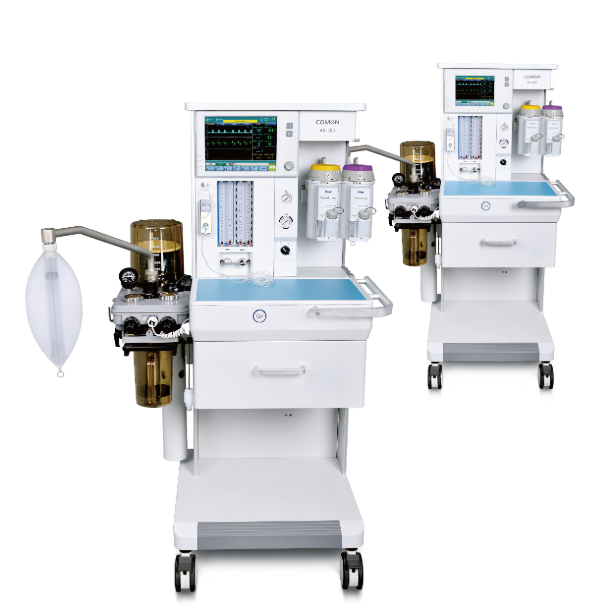
Effective perioperative care depends on the seamless integration of respiratory support and gas administration within the operating room. COMEN develops sophisticated workstations that assist medical teams in maintaining patient stability during complex surgical procedures. An anesthesia machine serves as the central hub for this process, combining a high-performance ventilator with precise gas delivery systems. By utilizing advanced anesthesiologist equipment, practitioners can ensure that oxygen levels and anesthetic concentrations are titrated with extreme accuracy, which is fundamental for preventing intraoperative complications and supporting a smooth recovery for patients of all ages.
Precision in Gas Delivery and Ventilation
Maintaining a stable plane of anesthesia requires hardware that can deliver medical gases with minute precision. They provide systems equipped with high-performance proportional valves and electronic flow control to ensure consistent tidal volumes, even for pediatric patients. This anesthesia machine architecture utilizes closed-loop oxygen concentration technology, which automatically adjusts gas ratios to match the clinician’s settings in real-time. Such advanced anesthesiologist equipment allows for low-flow anesthesia techniques, which not only improves the internal humidity of the breathing circuit but also reduces the consumption of expensive anesthetic agents during long operations.
Integrated Monitoring and Patient Safety
Continuous observation of vital signs is a core requirement for any successful surgical intervention. Modular monitoring capabilities incorporated into these workstations, allowing for the real-time tracking of parameters such as EtCO2, oxygen saturation, and anesthetic gas concentrations. When an anesthesia machine is equipped with these modules, it provides the clinical team with a comprehensive view of the patient’s respiratory and metabolic status. Furthermore, modern anesthesiologist equipment features intelligent alarm systems and automatic gas recognition, which help identify potential issues like hypoxic mixtures or circuit leaks before they can impact patient safety.
Ergonomic Design and Workflow Efficiency
The physical layout of the surgical environment significantly influences the speed and accuracy of a medical team’s response. They focus on creating ergonomic operation platforms with high-resolution touchscreens that present waveforms and data clearly. An anesthesia machine with an integrated breathing circuit reduces airflow resistance and simplifies the cleaning process, as many components are autoclavable to prevent cross-infection. By providing ample storage space and intuitive interfaces, this anesthesiologist equipment streamlines the clinical workflow, allowing caregivers to maintain their focus on the patient rather than the complexities of device management.
Advanced medical technology continues to improve the safety and efficiency of modern surgical care. By focusing on precision ventilation, integrated monitoring, and user-friendly design, COMEN provides the reliability needed in high-stakes clinical environments. These workstations ensure that every phase of anesthesia—from induction to maintenance and recovery—is handled with the highest level of technical accuracy. This commitment to functional excellence supports healthcare facilities in delivering superior outcomes while optimizing the daily workflows of their medical staff.