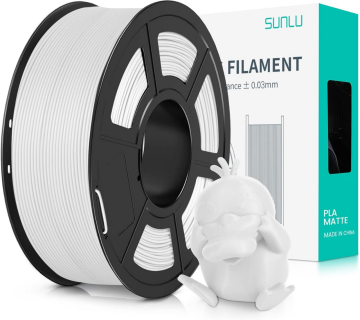
A printed model can look understated or highly reflective depending on the filament used. Matte PLA creates a muted surface that draws attention to the model’s shape, while glossy or silk-style PLA produces more noticeable highlights and color reflections.
Both finishes have a place in 3D printing, from architectural models and product mockups to colorful decorative pieces. The right option depends on the visual effect you want to achieve.
What Is the Difference Between Matte and Glossy PLA?
The main distinction is how each finish interacts with light. Matte filament produces a subdued appearance, while glossy filament reflects more light and creates a polished effect. These differences influence how colors, curves, edges, and surface details look on a finished model.
SUNLU‘s PLA Matte is positioned around a textured, non-glossy appearance, while its Silk PLA+ is described as having a smooth, glossy, silk-like finish. These products illustrate how filament selection can change the visual character of a print without requiring a separate surface coating.
How Does Matte PLA Change a Model’s Appearance?
A matte finish softens direct reflections and keeps attention on the shape, proportions, and contours of an object. This appearance can suit architectural models, product mockups, desk accessories, and display pieces where a restrained surface supports the design.
For these projects, matte pla filament can be a useful option when a low-sheen appearance is part of the intended result. However, a matte surface does not remove layer lines or correct printing defects. Layer height, print orientation, and extrusion consistency continue to influence the final appearance.
Matte finishes can also work well on models with intricate forms because they reduce strong highlights across raised and recessed areas. The visibility of small features still depends on the model’s geometry, color, and print resolution.
What Does Glossy PLA Add to a Print?
Glossy PLA produces stronger reflections that can make colors appear vivid and give curved surfaces a polished look. This finish can complement ornaments, figurines, colorful accessories, and decorative models where shine contributes to the overall design.
Silk-style PLA creates a distinctive reflective appearance as light moves across the printed surface. Depending on the viewing angle and lighting, highlights can emphasize curves and decorative details. The same reflections may also make certain ridges or uneven areas more noticeable, so surface quality remains important.
Glossy filament can be suitable for presentation pieces and decorative objects, particularly when a polished appearance is more important than a subdued finish. The exact result depends on the material formulation, color, model geometry, and printing conditions.
How Do the Two Finishes Compare?
| Consideration | Matte PLA | Glossy PLA |
| Surface appearance | Muted and textured | Shiny and reflective |
| Visual emphasis | Shape and surface form | Color and highlights |
| Common project styles | Architectural models, mockups, understated decor | Ornaments, figurines, decorative displays |
| Reflection under lighting | Generally softer | Generally more pronounced |
| Design effect | Subtle and restrained | Polished and expressive |
These are general visual tendencies rather than fixed rules. A dark glossy print may show distinct reflections, while a light matte model may make certain surface variations more visible. Lighting and the surrounding environment also influence how both finishes appear.
Do Printing Settings Affect the Finish?
Settings influence how evenly filament is deposited and how clearly individual layers appear. Nozzle temperature, print speed, cooling, layer height, and model geometry can all affect the finished surface. Start with the manufacturer’s recommended settings for the selected material and adjust the profile to suit the printer and model.
If a print looks uneven, consider extrusion and surface quality before attributing the result to its finish. Visible ridges may relate to layer height or orientation, while blobs and stringing can be associated with temperature, retraction, or filament condition.
These issues can occur with matte and glossy materials, although reflections may make imperfections easier to notice on glossy surfaces.
Which Finish Fits Your Project?
Matte finishes suit designs that emphasize shape, proportions, and a subdued appearance. Glossy finishes work well when reflective highlights and vivid colors contribute to the intended look.
The viewing environment matters, too: a model photographed under strong lights may appear different from one displayed on a shelf at home.
Consider the model’s purpose before selecting a finish. Architectural mockups and understated accessories may benefit from a low-sheen surface, while decorative ornaments may call for a more reflective effect. Color selection and surrounding materials can change the overall impression of either finish.
What Should You Consider When Buying Filament?
When comparing pla matte filament options, consider the available colors, material specifications, recommended printing temperatures, and the appearance you want from the final object. A matte finish can provide the intended look directly from the printer, while a silk-style material offers a more reflective alternative.
The choice is ultimately a design decision. Matching the finish to the model’s shape, color, and display environment helps create a coherent result. By considering appearance alongside printing requirements, makers can select a filament that suits their project without paying for visual characteristics they do not need.