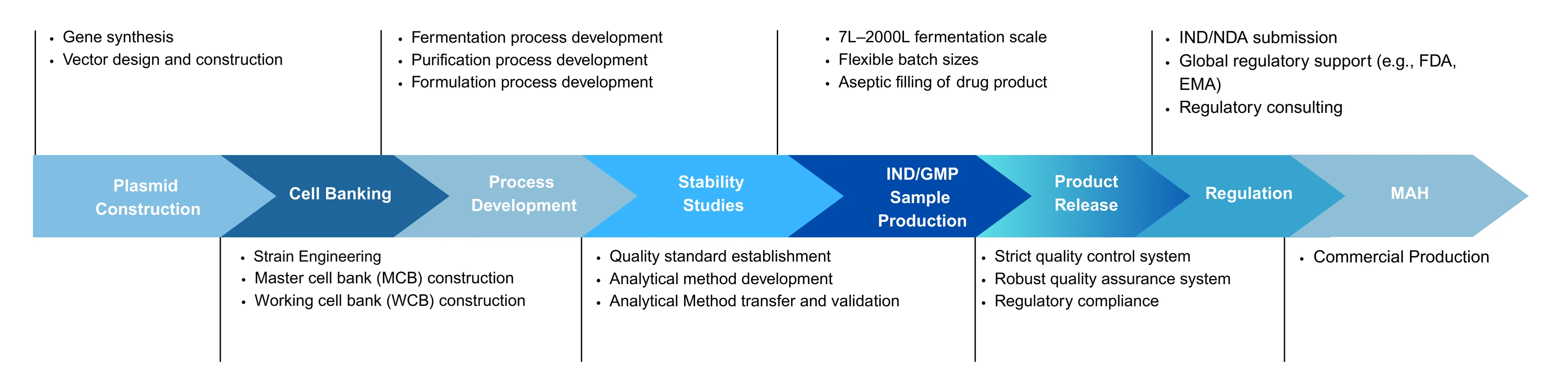
Miniature binding domains derived from heavy-chain camelid immunoglobulins offer remarkable structural stability, deep tissue penetration, and unprecedented access to cryptic disease epitopes. Translating these compact proteins from exploratory laboratory benches into scalable clinical assets requires sophisticated upstream and downstream bioprocess engineering. Biotechnology developers focusing on targeted oncology, infectious diseases, and autoimmune disorders increasingly rely on robust microbial platforms to scale active binding molecules efficiently.
Organizations such as Yaohai Bio-Pharma provide comprehensive microbial contract development and manufacturing solutions tailored specifically for VHH antibody production, illustrating how mature technical platforms support complex biological modalities throughout their entire developmental lifecycle.
Understanding Expression Host Selection And Genetic Engineering
Microbial expression platforms serve as the primary systems for generating high yields of recombinant single-domain proteins. Escherichia coli and various yeast systems offer rapid growth kinetics, low operational costs, and exceptional genetic tractability compared to traditional mammalian cell cultures. Choosing an appropriate host organism dictates overall protein folding accuracy, soluble expression yields, and subsequent recovery efficiency during industrial-scale runs.
Genetic optimization protocols further refine host performance by modifying codon usage, signal peptides, and promoter strengths to match specific molecular architectures. Strain engineering minimizes metabolic burden during high-density cultivation cycles, preventing structural degradation or premature truncation. Comprehensive screening procedures allow developers to evaluate multiple host strains concurrently before committing valuable resources to large-scale runs. Such preliminary evaluations reduce technical risks and establish a solid baseline for downstream processing operations.
Upstream Bioreactor Optimization And Fermentation Control
Tight regulation of cultivation environmental conditions is the core of upstream manufacturing, aiming to raise cell output and preserve protein structural stability in high-density fermentation. Key bioreactor setpoints including dissolved oxygen, pH value and temperature gradient decide harvested cell concentration and physiological status of strains. Dynamic adjustment of nutrient feeding regimens follows real-time metabolic changes of cultured cells, which lowers the probability of inclusion body aggregation and improves the harvest of soluble target protein.
Large-volume industrial fermentation depends on reliable process engineering systems to sustain aseptic operation and consistent batch quality during long production campaigns. When translating lab-scale bioreactor processes to commercial scale, operators need to fine-tune mass transfer efficiency and mixing performance, avoiding partial nutrient shortage and regional overheating inside the reactor. Skilled process engineers deploy professional analytical devices for real-time metabolic biomarker monitoring in the whole cultivation phase. As a full-service CRDMO, Yaohai Bio-Pharma deploys comprehensive technical packages to refine core upstream process parameters suitable for a wide range of microbial expression strains.
Analytical Development And Method Validation Protocols
Analytical testing protocols must evolve concurrently with manufacturing process improvements to ensure comprehensive product characterization and lot-release reliability. Method development teams design stability-indicating assays that evaluate degradation pathways under various environmental stress conditions, including thermal exposure and oxidative stress. Validation studies confirm the accuracy, precision, and linearity of analytical methods prior to clinical trial material release. Detailed characterization data provides critical insights into higher-order molecular structures.
Reference standard characterization establishes a benchmark for routine lot-release testing throughout the product lifecycle. Stability testing protocols monitor physical and chemical attributes over extended storage durations to determine expiry dating. Collaborative analytical teams work closely with clients to resolve unexpected impurities or assay discrepancies swiftly. Comprehensive analytical support provides greater confidence in therapeutic safety and efficacy profiles.
Managing Regulatory Pathways And Quality Compliance
Regulatory harmonization remains a fundamental hurdle for biopharmaceutical developers seeking international market authorization for novel binding domains. Facilities must operate under current Good Manufacturing Practice standards enforced by major global health authorities. Regular quality audits and rigorous documentation practices verify that every manufacturing phase adheres to established international compendia. Transparent record-keeping systems offer complete traceability from raw material intake to final product release.
Standardized quality management systems encompass comprehensive equipment qualification, personnel training, and environmental monitoring protocols. Independent quality assurance teams oversee deviation investigations and implement corrective action plans proactively. Partnering with facilities holding robust audit histories significantly accelerates regulatory dossier review processes and mitigates clinical hold risks. Structured compliance frameworks protect patient safety while facilitating smooth cross-border commercialization pathways.
Assessing Facility Infrastructure And Scalable Capabilities
Production facilities are designed with ample operational flexibility to cater to variable batch scales for each clinical development stage, covering early exploratory preparations through large-scale commercial manufacturing. Transitioning from pilot scales to massive industrial output requires robust facility layouts equipped with dedicated processing suites. Evaluating equipment versatility, such as single-use bioreactor bags versus stainless steel systems, helps align operational capacity with project goals.
Cleanroom classification and environmental control systems must meet rigorous international sterility standards. Air handling units equipped with high-efficiency particulate air filtration maintain controlled pressure differentials across sensitive manufacturing zones. Advanced utility systems supply purified water and clean steam essential for aseptic processing operations. In addition, Yaohai Bio-Pharma utilizes specialized cleanroom architectures and mature microbial platforms to maintain high standards for clinical-grade manufacturing.
Conclusion
Executing successful biotherapeutic manufacturing campaigns relies heavily on integrating mature upstream fermentation platforms with rigorous downstream purification protocols. Full technical transparency, validated analytical workflows and flexible production infrastructure help development teams navigate intricate regulatory review procedures smoothly. Collaborations with professional microbial CRDMO partners streamline clinical development timelines and support the accelerated rollout of novel binding biomolecules to global healthcare markets with stable operational assurance.