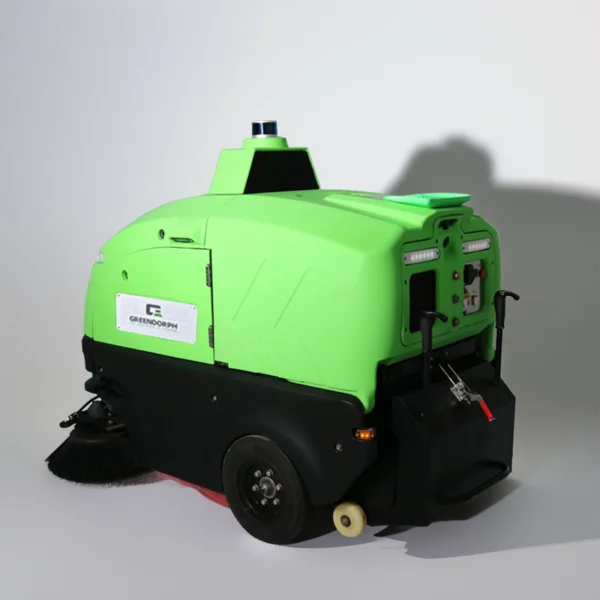
Sustaining clean hardscapes across municipal plazas, educational campuses, and industrial estates presents continuous staffing challenges for facility operators. Windborne dirt, organic waste, and coarse sand collect in surface joints, gradually eroding concrete seals and increasing physical hazards for pedestrians. Manual broom sweeping across sprawling properties demands intense physical labor, leading to worker fatigue, frequent injuries, and uneven cleaning outcomes.
Integrating an autonomous outdoor robot cleaner into routine operations provides property directors with a systematic approach to balance labor allocation while maintaining clear pathways. Greendorph engineering focuses on addressing these ground maintenance hurdles through specialized motorized systems.
Transitioning from manual labor to automated floor care requires analyzing how physical sweeping mechanics, battery endurance, and sensor-based pathing interact on varied surfaces. Conventional manual crews often focus their energy on open walkways, leaving tight perimeter corners or textured paving joints neglected due to time constraints.
Deploying a calibrated outdoor robotic vacuum cleaner lifts heavy daily workloads from grounds personnel, shifting human effort toward specialized tasks like arbor care and structural repairs. Examining these operational dynamics helps facility planners select equipment that optimizes daily cleaning workflows effectively.
Mitigating Physical Strain and Repetitive Motion Fatigue
Manual push sweeping across extensive concrete or stone surfaces subjects maintenance workers to repetitive physical strain on wrists, shoulders, and lower backs. Sustained physical exertion outdoors, especially under harsh weather conditions, increases absenteeism and turnover rates within municipal cleaning departments. Motorized sweeping assistance replaces constant manual pushing with controlled mechanical propulsion, protecting workers from chronic fatigue.
Automating routine path cleaning allows grounds personnel to redirect their attention toward higher-value facility care without depleting physical energy. Deploying an outdoor robot cleaner standardizes debris collection across expansive grounds, preventing human error caused by exhaustion during long shifts. This reallocation of manual labor elevates overall site maintenance standards while fostering safer working environments for facility staff.
Enhancing Surface Sanitation Through Autonomous Mechanical Mechanics
Manual sweeping frequently relies on standard brooms that push coarse sand forward while scattering fine dust back into the surrounding air. This superficial sweeping leaves microscopic particulates lodged deep within paving crevices, where vehicle tires grind them into abrasive paste. Advanced sweeping units combine high-torque rotating brushes with negative-pressure air channels to lift embedded debris cleanly in a single pass.
Utilizing a self-operating outdoor robotic vacuum cleaner ensures uniform brush pressure across textured concrete, stone tiles, and porous asphalt roads. Multi-stage filtration chambers capture fine particulate matter securely, keeping airborne dust from settling onto surrounding windows or outdoor seating. Property managers evaluating real-world outdoor vacuum robot capabilities can observe how motorized suction systems maintain consistent cleanliness standards across varied hardscape environments.
Optimizing Operational Hours via Fully Automated Systems
Sustaining immaculate public grounds requires continuous cleaning cycles that often conflict with peak pedestrian foot traffic during standard working hours. Running manual cleaning crews during busy afternoon periods creates physical obstacles, slowing down pedestrian movement and increasing liability risks. Autonomous utility platforms can execute preset or scheduled sweeping routines during lower-traffic periods, helping reduce disruption to daily site activities.
The Auto Sweeper YJ130 illustrates this automated capability, functioning as a fully autonomous outdoor sweeper featuring a primary cleaning system enhanced by three auxiliary functions: suction, airflow-assist, and misting spray. Delivering over 95% cleaning efficiency, it operates continuously for 6-8 hours, making it ideal for large-area outdoor sanitation across parks, industrial campuses, sidewalks, schools, and similar environments. This independent operation allows property managers to keep public walkways spotless prior to morning arrival times.
Controlling Environmental Airborne Particulates with Misting Networks
Dry manual sweeping across dry brick plazas routinely kicks up dense silica dust clouds, exposing nearby pedestrians to respiratory discomfort. Regulatory compliance standards increasingly require facility operations to implement active dust suppression during routine floor maintenance. The misting spray function releases fine droplets during cleaning to help manage airborne dust before debris is collected.
Deploying an outdoor robot cleaner equipped with liquid suppression prevents dry dust from venting into nearby air intakes or open dining areas. Captured soil stays contained inside internal hoppers until automated dumping routines occur, preserving regional air quality. This controlled moisture application keeps outdoor environments fresh without leaving excess water puddles behind on walking surfaces.
Simplifying Mechanical Layouts to Reduce Life-Cycle Downtime
Traditional combustion utility vehicles feature complex hydraulic lines, direct drive belts, and fluid pumps that demand frequent, costly workshop repairs. Dusty operating conditions accelerate wear on these internal components, leading to unexpected breakdowns that disrupt weekly cleaning schedules. Electric power can reduce reliance on fuel-based systems and support consistent operation across routine outdoor cleaning tasks.
Operating an electric outdoor robotic vacuum cleaner lowers weekly maintenance checklists while protecting annual facility repair budgets from unexpected expenses. Its electric power system supports consistent operation across demanding outdoor cleaning shifts, while equipment longevity depends on operating conditions and routine maintenance. Smarter Outdoor Cleaning, Fully Automated: Greendorph’s outdoor cleaning robots are engineered to handle large-scale outdoor environments with reduced manual involvement, providing reliable performance shift after shift.
Conclusion
Rebalancing labor demands across expansive commercial campuses requires replacing manual broom routines with efficient electric utility hardware. Deploying an autonomous outdoor robot cleaner enables facility managers to protect concrete pavements, control fine dust, and eliminate repetitive physical strain for grounds personnel. These compact, battery-powered systems deliver consistent cleanliness across public plazas while lowering annual maintenance expenses substantially. Incorporating Greendorph equipment into ground care programs provides property directors with sustainable tools built to keep modern public facilities immaculate.