A winter jacket may provide excellent warmth outdoors but become inconvenient if it takes up too much space in a backpack or travel bag. For hikers, commuters, and travellers, packability is closely connected to insulation thickness, material recovery, garment construction, and the way trapped air responds to compression.
Selecting suitable insulation fabric for clothing involves more than comparing warmth ratings; the material must also retain its useful properties after being folded, compressed, and unpacked repeatedly. Y-Warm develops thin insulation solutions for apparel applications where thermal performance and compact garment design need to work together.
Why Insulation Structure Determines Packability
The volume occupied by a jacket depends heavily on the structure of its insulating layer. Down creates warmth through clusters that expand and trap air, producing substantial loft relative to its weight. This structure can compress into a relatively small package and regain much of its volume after release, provided the down remains dry and has not suffered excessive damage or contamination.
Synthetic fills use fine fibres arranged to create air pockets. Their compression behaviour varies according to fibre shape, density, bonding, and construction. Some synthetic materials recover quickly after unpacking, while others may retain compression marks or gradually lose loft after repeated storage. The outer shell and lining can also influence how easily the entire jacket folds.
Thin engineered insulation takes another approach to reducing packed volume. Instead of depending entirely on a deep layer of lofted fibres, it can provide thermal resistance through a much thinner internal structure. This makes insulation fabric for clothing particularly relevant to lightweight jackets designed for layering, travel, or everyday carrying, although its actual packability still depends on flexibility and recovery after pressure.
Compression Recovery and Long-Term Material Stability
Packability is not simply a measure of how small a jacket becomes inside a stuff sack. A material also needs to recover after compression so that its intended thickness and thermal function remain available during subsequent wear. If the insulation stays flattened, the garment may lose part of its ability to retain air and slow heat transfer.
Compression recovery depends on the material’s internal structure. Down clusters can expand after pressure is released, while synthetic fibres rely on their elasticity and arrangement to regain volume. Engineered porous materials may respond differently: excessive pressure, particularly when combined with heat, can affect their internal structure and reduce their ability to recover.
Storage habits matter as well. A jacket kept compressed for a short journey may behave differently from one left tightly packed for several weeks. Manufacturers should provide appropriate storage and handling guidance, while product developers can assess recovery through repeated compression-and-release testing. These results help determine whether insulation fabric for clothing is suitable for garments intended to be packed frequently.
Fabric Thickness, Flexibility, and Garment Construction
A compact insulation layer does not automatically produce a compact jacket. Shell fabrics, linings, pockets, zippers, seam allowances, and additional protective layers all contribute to the final packed dimensions. A bulky hood or heavily reinforced shoulder section may occupy more space than the insulation itself, making whole-garment testing more informative than measuring the material in isolation.
Flexibility also affects how efficiently a garment can be folded. Stiff layers resist tight folding and may create awkward creases, while softer materials can adapt more readily to the shape of a storage bag. However, repeated sharp folding should be assessed carefully if the insulation contains a delicate internal structure or requires specific handling conditions.
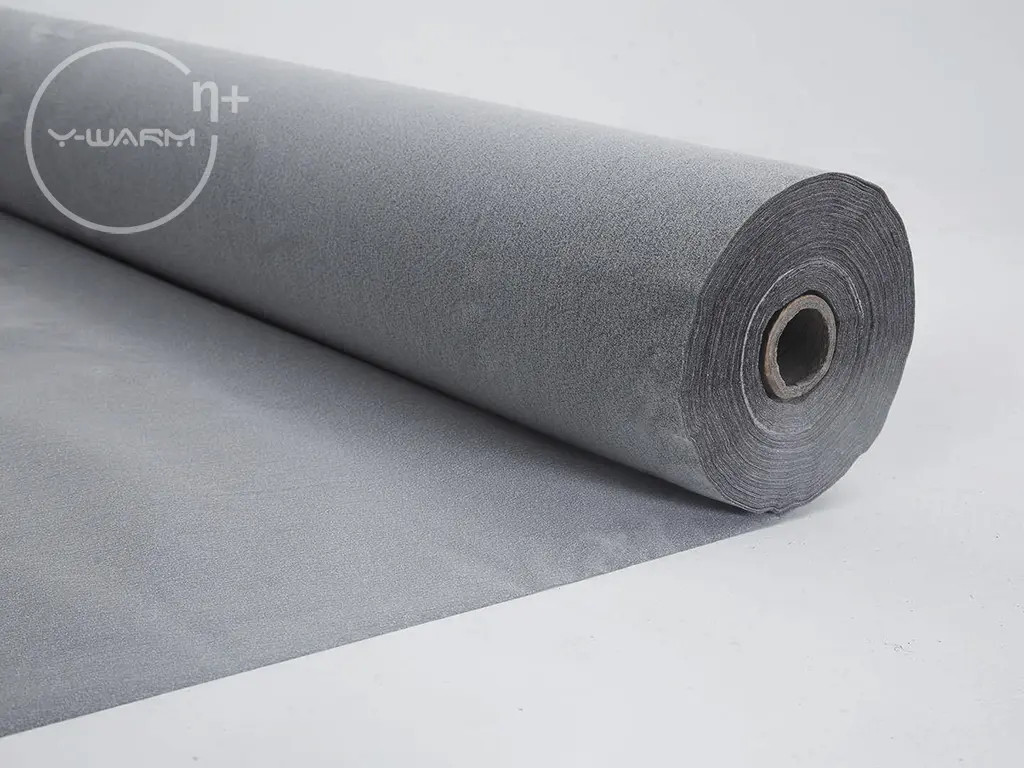
Y-Warm supplies its insulation in rolls measuring 50 metres in length and 150 centimetres in width. This format supports material handling and garment production, while its thin construction offers apparel developers another option when designing jackets with reduced internal bulk. The finished garment’s packed size will still depend on its shell, lining, pockets, and assembly choices.
Testing Packability in Real-World Conditions
A useful packability assessment should measure both compressed volume and recovery. A jacket can be placed inside a standard compression bag under a defined load, with its packed dimensions or volume recorded. After release, the garment can be left to recover for a specified period before its thickness and thermal performance are assessed.
Repeated testing provides a clearer picture of durability. A single compression cycle may reveal little about how a jacket behaves after months of travel or outdoor use. Testing across multiple cycles can identify changes in loft, flexibility, surface condition, and thermal resistance. Consistent temperature and humidity conditions also make comparisons between different insulation constructions more reliable.
Practical trials should reflect the garment’s intended use. A jacket designed for daily commuting may spend only brief periods inside a bag, whereas backpacking apparel may undergo frequent compression in limited storage space. Designers should consider unpacking time, ease of folding, moisture exposure, and comfort after recovery. Comparing insulation fabric for clothing under these realistic conditions helps distinguish a material that merely compresses well from one that remains functional throughout repeated use.
Conclusion
A jacket’s packed size reflects the combined behaviour of its insulation, fabrics, and construction rather than one specification alone. Loft, compression recovery, flexibility, and storage conditions all influence whether warmth can be carried conveniently without compromising the garment’s performance.
Y-Warm develops thin thermal insulation for winter jackets, workwear, and other cold-weather apparel, giving clothing manufacturers an alternative for designs where reduced bulk is an important consideration. Consider Y-Warm’s material solutions when developing lightweight jackets intended to balance thermal function with practical storage and portability.