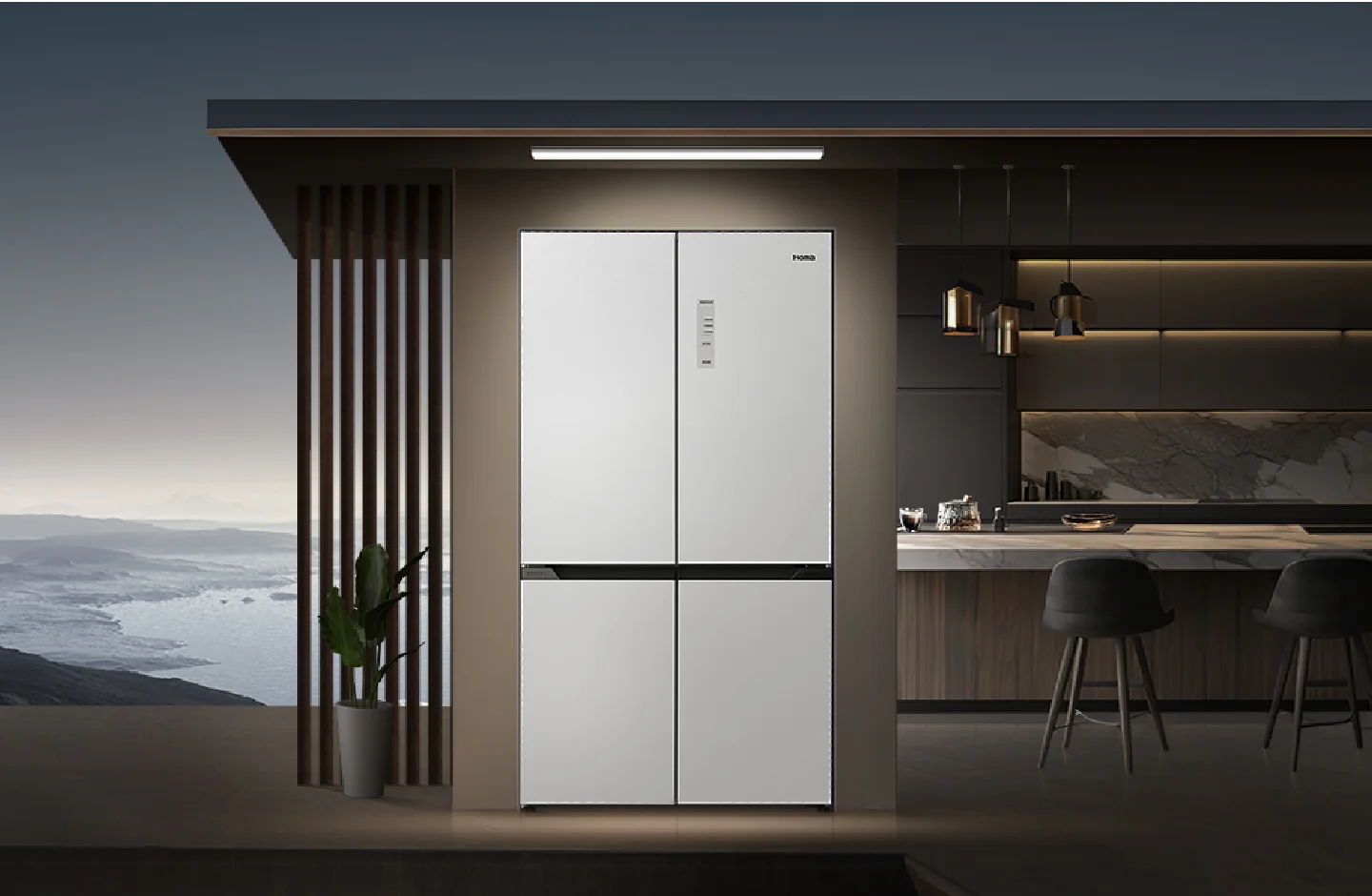
For an appliance brand or importer, refrigerator design is both a product decision and a positioning decision. The appliance needs a recognizable role in the range, while its appearance should suit the kitchens and customer preferences the buyer intends to serve. A distinctive finish may help a product stand out on the sales floor; a more restrained appearance may support a different place in the assortment.
Assessing China refrigerator design through this commercial lens gives visual decisions a practical purpose. Buyers can define the intended market, review suitable product formats and discuss how appearance will support their brand. The objective is a coherent product proposal that can be evaluated alongside specifications, packaging and supply requirements.
Visual Presence with a Defined Purpose
A design brief should begin with the product’s role in the buyer’s range. Is it intended to introduce a new visual direction, complement existing appliances or offer a different choice within an established price tier? Answering that question gives the supplier a clearer reason for the requested appearance. It also helps the buyer avoid selecting isolated details that look attractive but do not work together as a product identity.
The brief can describe the desired visual effect through reference images and a prioritized list of characteristics. Colour, surface finish and the appearance of visible controls are possible discussion points, subject to the options available for the selected model. Buyers should distinguish essential brand requirements from preferences that can be adapted during development. This makes the discussion more productive than presenting every visual choice as equally important.
During sample review, assess the finish under the lighting conditions relevant to the intended showroom or kitchen setting. Compare it with the approved reference and adjacent materials, then record any differences before approval. This gives visual feedback a specific basis and keeps later discussions tied to an agreed reference.
A China refrigerator comparison should also consider how the design will be presented across sales channels. Product photography, packaging and point-of-sale materials need to describe the same approved appearance and configuration. A buyer can identify these requirements early so that the commercial presentation is considered alongside the appliance rather than assembled after the product decision has been made.
This is particularly relevant to private-label and ODM projects, where the visible product and its supporting materials contribute to the same brand impression. Homa Appliances provides CMF assistance for colours, materials and finishes, together with support for product imagery, manuals and packaging. Those services give buyers concrete topics to discuss when defining the scope of a branded project. The actual selections should be agreed against the selected product and its development requirements.
Visual distinction should remain purposeful. A buyer can compare proposals by asking whether each choice reinforces the intended product tier and whether the range still looks consistent as a whole. A strongly differentiated model may be appropriate for one position in the portfolio, while a quieter treatment may be appropriate for another. The decision follows the commercial brief, rather than a general assumption that more prominent styling is always better.
Coordination within the Whole Interior
Kitchen integration adds another layer to that brief. Buyers need to distinguish the desired appearance from the installation requirements that make a product suitable for its intended setting. Reference images can communicate the visual direction, while model drawings and instructions are needed to review dimensions, clearances and other installation details. Both forms of information should be used during selection, because they answer different questions.
Homa Appliances offers a no-frost built-in range for buyers considering kitchen-integrated designs. The format can be assessed against the target range’s design direction, then narrowed to models whose specifications suit the project. This moves the discussion from a broad preference for integration to a defined product proposal that the purchasing and technical teams can review.
For a distributor or retailer, planning a China refrigerator range can follow the same process. Buyers can identify where a built-in product belongs alongside other refrigerator formats, what distinguishes it visually and which installation information customers will need. When these points are documented, product descriptions and sales guidance can explain the proposition without treating appearance as a substitute for technical suitability.
Supplier capability matters because the design proposal must eventually become an orderable product. Homa Appliances combines more than 20 years of refrigerator manufacturing experience with large-scale production and ODM services, supported by supply management and export experience. These capabilities are relevant to buyers discussing private-label ranges and wholesale supply, where design decisions need to be coordinated with production and market requirements.
A practical approval record can bring those discussions together. It can identify the selected model, agreed appearance, required brand materials and the documentation used for installation review. The quotation and any agreed sample review should refer to the same record. Changes can then be assessed for their effect on the product and its supporting materials, rather than handled as disconnected visual adjustments.
Balancing identity and integration is therefore a structured sourcing decision: define the brand role, select a suitable format, confirm the model requirements and agree how the product will be presented. That approach gives design a clear place in the buyer’s wider plan for a commercially usable refrigerator range.