Industrial equipment is becoming more intelligent, connected, and decentralized. Machines are expected to process larger amounts of data, support AI-based functions, and communicate with multiple systems while maintaining compact designs and efficient power usage.
These changes are influencing hardware decisions. Many developers are moving toward ARM-based computing platforms because they can combine processing capability, connectivity, and lower power requirements in a compact form factor.
The growing adoption of an industrial single board computer based on ARM architecture reflects a broader shift toward edge intelligence. Instead of depending entirely on centralized servers, industrial systems increasingly require computing resources close to sensors, machines, and operators.
Industrial Devices Are Requiring a Different Type of Computing Platform
Traditional industrial computers were often designed around maximum processing capability. However, many modern industrial products face different engineering priorities.
Factory controllers, smart gateways, inspection systems, and intelligent terminals frequently operate in locations where space, heat dissipation, and energy consumption are limited. A large computing system may provide unnecessary capacity while increasing installation complexity.
ARM architectures address these requirements through efficient processor designs and highly integrated hardware ecosystems. Developers can build smaller systems that still support operating systems such as Linux or Android while maintaining the flexibility needed for industrial software development.
An embedded single board computer based on ARM technology can integrate communication interfaces, graphics capability, storage, and processing functions into a single compact platform. This simplifies product design for manufacturers developing connected industrial equipment.
The Shift Happens at the Edge, Not Inside the Data Center
The growth of edge computing is one of the strongest reasons behind ARM SBC adoption. Industrial applications increasingly require real-time responses that cannot always depend on cloud communication.
For example, machine vision systems on production lines need immediate image analysis to identify defects or monitor processes. Autonomous mobile robots require local decision-making to navigate safely. Energy management systems need continuous monitoring and rapid control responses.
ARM platforms are well suited for these scenarios because they can deliver efficient computing close to the data source. Developers can select processors with appropriate CPU performance, graphics acceleration, or AI processing capabilities depending on the application.
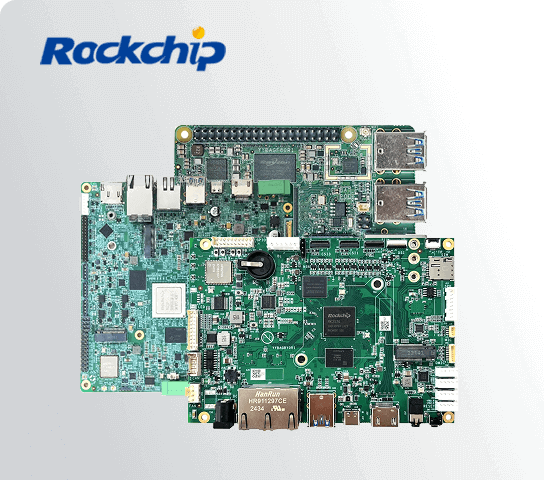
Vantron provides ARM-based and x86-based embedded boards designed for industrial and commercial scenarios, supporting processor options including NXP, Qualcomm, MediaTek, and Rockchip platforms.
The popularity of ARM SBCs is therefore not only related to hardware size. It is connected to the changing architecture of industrial systems, where intelligence is distributed across machines, devices, and edge nodes.
Processor Ecosystems Are Expanding ARM’s Industrial Reach
ARM adoption in industrial markets has accelerated because multiple semiconductor manufacturers now provide specialized platforms for embedded applications.
NXP i.MX8 and i.MX9 series processors are widely considered for industrial control, IoT gateways, and human-machine interface designs where balanced computing and embedded features are required. Qualcomm QCS platforms provide options for intelligent edge devices requiring advanced connectivity and AI-oriented processing.
The growing adoption of ARM SBCs in industrial applications is driven by their ability to balance computing performance, power efficiency, compact form factors, and integrated functions. Many industrial devices do not require the processing resources of a traditional PC but still need to handle local control, sensor data, networking, multimedia, or edge AI workloads. ARM-based SBCs can provide the required computing capability within a relatively constrained power and thermal budget, making them suitable for equipment that operates continuously or has limited space for cooling.
ARM’s broader embedded ecosystem also gives developers more flexibility when designing application-specific systems. Instead of selecting hardware primarily for maximum processing performance, engineers can choose an ARM platform according to workload, power requirements, connectivity, and deployment conditions. This balance between performance and efficiency is an important reason ARM SBCs are gaining traction across industrial automation, IoT gateways, smart devices, and edge computing applications.
This ecosystem diversity allows engineers to select platforms according to project requirements rather than adapting every design around a single processor family.
Vantron’s embedded computing portfolio includes boards based on Qualcomm, NXP, MediaTek, Rockchip, and Intel platforms, giving developers different architecture choices for industrial projects.
ARM SBCs Are Becoming Part of Product Design Strategies
Industrial companies are increasingly treating computing hardware as part of the overall product architecture rather than as a separate component.
A smart machine manufacturer may require a compact board that supports communication interfaces, camera inputs, user displays, and local analytics. A transportation equipment provider may need a reliable computing platform that fits within strict space and power limits.
ARM SBCs provide a practical foundation for these designs because developers can start from established hardware platforms and customize software or system integration around specific applications.
This approach reduces development complexity compared with creating a completely new computing architecture. It also helps manufacturers accelerate product development while maintaining flexibility for future upgrades.
For industrial OEMs, the value of ARM SBCs often comes from enabling smarter products rather than simply replacing existing computers.
Adoption Depends on More Than Processor Performance
Although processing capability influences hardware selection, industrial deployment requires broader evaluation.
Industrial systems may operate for many years, making long-term hardware availability an important factor. A suitable board should provide stable support for software development and future maintenance requirements.
Connectivity is another critical area. Industrial equipment often needs Ethernet, CAN, UART, USB, GPIO, or wireless communication options to connect with existing systems.
Thermal design and reliability also affect deployment decisions. Compact ARM solutions can help reduce power consumption, but the complete system design must still match the operating environment.
Vantron supports industrial embedded development through ARM-based SBCs, system modules, and customized computing solutions designed for automation, transportation, smart devices, and other edge applications.
ARM Single Board Computers are becoming popular in industrial applications because they match the direction of modern equipment development. The demand is moving from large centralized computing systems toward compact, intelligent, and connected edge platforms.
The key reason behind ARM adoption is not simply lower power consumption or smaller hardware size. It is the ability to create flexible industrial systems that combine local processing, connectivity, and application-specific intelligence.
As industrial products continue evolving toward smarter edge architectures, ARM-based computing platforms are likely to remain an important foundation for next-generation automation and IoT solutions.