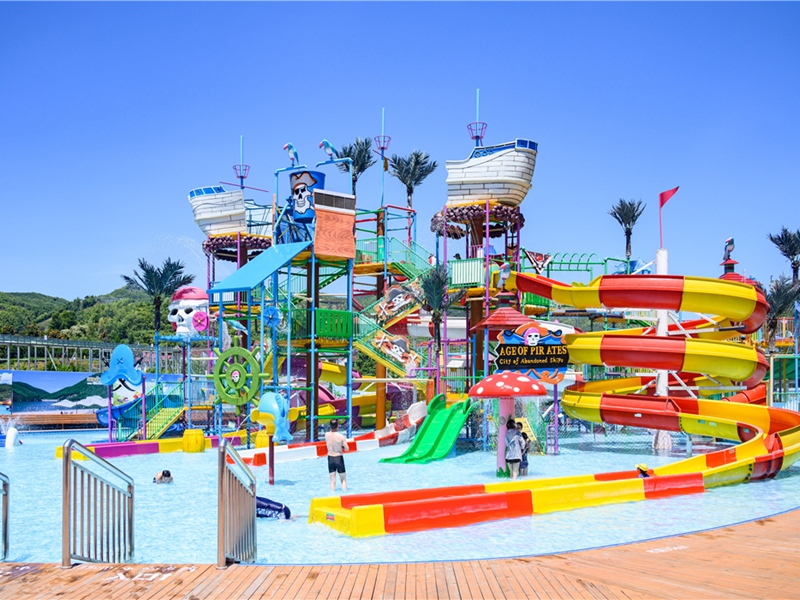
A water park builder turns a proposed attraction mix into a coordinated project, but the job is not defined by the number of slides supplied. Its real substance lies in the decisions and connections between planning, fabrication, site work and preparation for operation.
Those stages involve different specialists. The owner’s useful question is which deliverables connect them, who produces each one and where responsibility passes to another party. A colourful layout is an early output, not evidence that the whole construction task has been resolved.
Establish What the Project Includes
Scope comes before sequencing. Land conditions, utility connection points and planning constraints affect what can be developed, while the intended visitors and investment budget influence the attraction mix. Equipment decisions made without these inputs risk solving a different problem from the one the site actually presents.
The roles of water games equipment manufacturers and local civil contractors can overlap in coordination without becoming identical. Supplying equipment, preparing foundations and supervising assembly are distinct responsibilities. A project brief needs to identify the party responsible for each rather than assume that a broad service description includes everything.
For example, a manufacturer may provide equipment drawings and installation guidance while a local contractor carries out excavation and concrete work. Both depend on the same agreed arrangement. Unclear boundaries become particularly costly when one team’s completed work prevents the next team from starting.
Convert the Attraction Mix into Buildable Information
A layout must explain relationships, not merely place objects inside a boundary. Platforms need approaches, exits need clear routes, and equipment requires access during both installation and maintenance. A water park builder coordinates these connections so that individual attractions form a workable site.
A water slide manufacturer contributes information about the selected ride configuration, while the wider drawing package places that configuration beside other facilities. Plans, elevations and a three-dimensional arrangement answer different questions. A route that appears clear on a plan can still conflict with another structure vertically.
The bill of materials connects those drawings to the supply package. Its purpose is practical: components discussed during design need to remain identifiable when the quotation, production schedule and delivery arrangements are reviewed. Changes to the attraction mix consequently require more than moving an illustration.
Check Components Before They Reach the Site
Manufacturing creates a second opportunity to test whether the design can be assembled as intended. Sections that look continuous in a model still need compatible connections and a suitable finished surface. Factory checks address the physical equipment rather than the attractiveness of the concept.
Acceptance work can examine alignment, flange thickness, surface finish and structural integrity. Preassembly checks the fit between components before transport. The contribution of water games equipment manufacturers therefore extends beyond making separate pieces: it includes checking the relationships between those pieces before site installation begins.
These checks do not make site inspection redundant. Transport, handling and assembly introduce later stages that also need attention. A clear record distinguishes what was checked before dispatch from what remains to be verified once the equipment stands in its final position.
Connect Factory Work with Local Construction
Foundation readiness sets the order of installation. Towers and supports must be coordinated with the prepared site before the flumes are assembled. Joint alignment, sealing and surface continuity then require attention at the connections where separately manufactured sections become a complete route.
At this interface, Jinchao combines equipment manufacturing with professional installation guidance. Its project services also cover planning, customised design and after-sales support. The scope still needs to distinguish that guidance from the work and resources supplied by local contractors on the particular development.
A water slide manufacturer cannot be assessed solely by a finished product photograph when the purchase also depends on installation support. The relevant questions concern drawings, supervision and the agreed assembly sequence. Each answer needs to connect the equipment package to the actual site conditions.
Prepare the Operating Team
Commissioning tests the installed system; training prepares people to operate and care for it. Dry and wet testing, equipment instructions and practical familiarisation serve different purposes. None can be replaced by the observation that the attraction looks complete from outside its perimeter.
The water park builder also needs a clear handover point. Outstanding corrections, operating documentation and training responsibilities require agreement before routine operation begins. Equipment-specific instructions identify the supplied configuration for the receiving technical team, while practical guidance explains how that information applies to the installed attraction.
Judge the Work by Its Deliverables
A complete project can be traced through its outputs: an agreed layout, defined supply scope, checked components, coordinated installation and documented handover. These make comparisons between water games equipment manufacturers more meaningful than broad claims about comprehensive service or an unusually large product catalogue.
Jinchao‘s combined planning, production and support offering can be discussed against those same stages. Its role as a water slide manufacturer is one part of the project, while the agreed responsibilities establish how that part connects with local construction and the owner’s operating team.
The builder’s contribution is clearest when every handover has a defined input and output. Named contacts make later questions easier to direct, rather than leaving the operator to discover who holds the relevant technical information. The final handover is useful only when the operating team has the information and agreed support needed to take responsibility.